
Design Secrets for Homes That Feel Solid, Quiet and Built for Generations
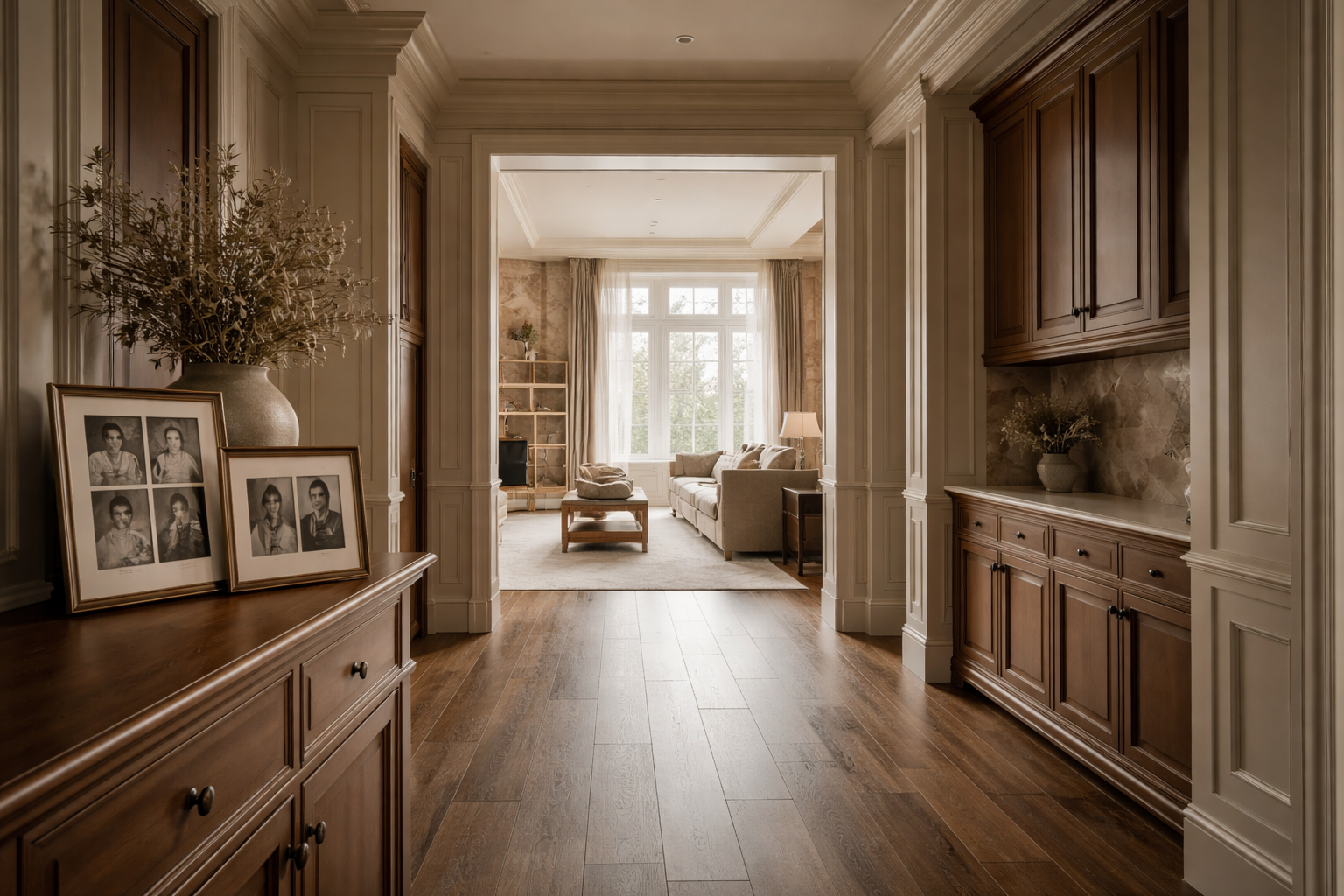
You can feel the difference the moment you walk in.
Some homes look impressive in photos, but once you’re inside, something feels off. Floors have a slight give. Doors sound hollow when they close. Noise travels more than it should. It’s subtle, but it lingers in the background.
Other homes feel completely different. The floors are firm underfoot. The air feels still and quiet. Every detail, from the trim to the cabinetry, feels intentional and substantial.
That feeling isn’t accidental. It’s the result of decisions most people never see.
If you’re building a home for your family, especially one you want to enjoy for decades, these are the design and construction principles that make the difference.
Why “Solid” Feels Different, and Why it Matters
Many homeowners assume that if they invest enough, the result will naturally feel high quality. But cost alone doesn’t guarantee that outcome.
The truth is, “solid” is not a style. It’s a result of how the home is designed and built from the ground up.
A home that feels solid:
Doesn’t bounce when kids run across the room
Doesn’t echo or carry sound from one space to another
Feels grounded, quiet, and stable in everyday use
This matters more than most people expect. It’s not about showing the home to guests. It’s about how it feels on a Tuesday night with your family.
That sense of calm and permanence is what turns a house into something you never want to leave.
Structure Comes First, Even When You Can’t See it
One of the biggest misconceptions in luxury homebuilding is that finishes define quality.
They don’t. Structure does.
The way your floor systems are engineered, the spans your framing allows, and how loads are distributed all determine whether your home feels firm or flexible.
For example, longer spans without proper support can create subtle movement in floors. Over time, that movement becomes noticeable. It’s not a failure, but it’s not the experience most homeowners are expecting at this level.
A well-built home accounts for this early. It prioritizes:
Proper floor system design to minimize deflection
Strategic beam placement to support key areas
Framing decisions that favor rigidity over convenience
These aren’t the details you see during a showing. But they’re the ones you feel every single day.
Sound Control is What Creates a Quiet Home
A quiet home doesn’t happen by accident. It’s designed.
Many homes, even expensive ones, lack proper sound separation. You hear footsteps from above. Conversations travel between rooms. Mechanical systems create background noise you can’t ignore.
This is where thoughtful planning changes everything.
A quieter home typically includes:
Insulated floors and interior walls, not just exterior ones
Strategic separation between living areas and bedrooms
Solid-core doors instead of hollow ones
Mechanical systems designed to minimize noise and vibration
These choices aren’t always visible, but they shape how the home feels to live in.
When sound is controlled properly, the home feels calmer. More private. More comfortable.
For families, especially with young children, that difference is significant.
Materials and Millwork Define the Experience
Once the structure and sound are handled correctly, the next layer is what you interact with.
This is where many homeowners focus, and it does matter. But it only works if the foundation underneath is right.
The homes that feel truly refined tend to share a few characteristics:
Cabinetry that is well-built, properly installed, and aligned
Millwork that is consistent, proportioned correctly, and integrated into the design
Doors and hardware that feel substantial in your hand
Finishes that are selected to work together, not compete for attention
There’s a noticeable difference between something that looks good in a showroom and something that feels right in your home every day.
That difference comes from coordination. It comes from a builder and team who understand how all the parts come together, not just individually, but as a complete experience.
Detail and Coordination are What Make it Last
Homes that feel good on day one can still fall short over time if the details aren’t handled properly.
Gaps appear. Materials move. Small issues compound into larger frustrations.
This is where process matters as much as design.
A home built for the long term requires:
Careful sequencing of trades so materials are installed in the right conditions
Close supervision of finishes and transitions between materials
Ongoing quality checks, not just at the end, but throughout construction
It’s also where experience plays a critical role. Knowing where problems tend to show up allows you to prevent them before they happen.
For a family investing in a home at this level, longevity isn’t optional. It’s expected.
What This Really Means for Your Family
At a glance, many luxury homes can look similar. The differences show up in how they feel to live in.
A home that is built with these principles:
Feels quieter at the end of a long day
Feels more comfortable when your family is all together
Feels dependable, not just now, but years from now
And perhaps most importantly, it removes a layer of friction you might not even realize exists until it’s gone.
That’s the difference between a home that impresses and a home that truly supports your lifestyle.
Build With Confidence, not Guesswork
If you’re planning a custom home or a full transformation, it’s easy to focus on what you can see, finishes, layouts, and features.
Those matter. But the experience of living in your home will be shaped far more by the decisions you don’t see.
The structure. The sound control. The coordination. The attention to detail.
Those are the elements that create a home that feels solid, quiet, and built for generations.
If you want guidance on how to approach your project with that level of clarity and care, we’re here to help.