
Why “My Friend Had a Nightmare Builder” Happens More Often Than You Think
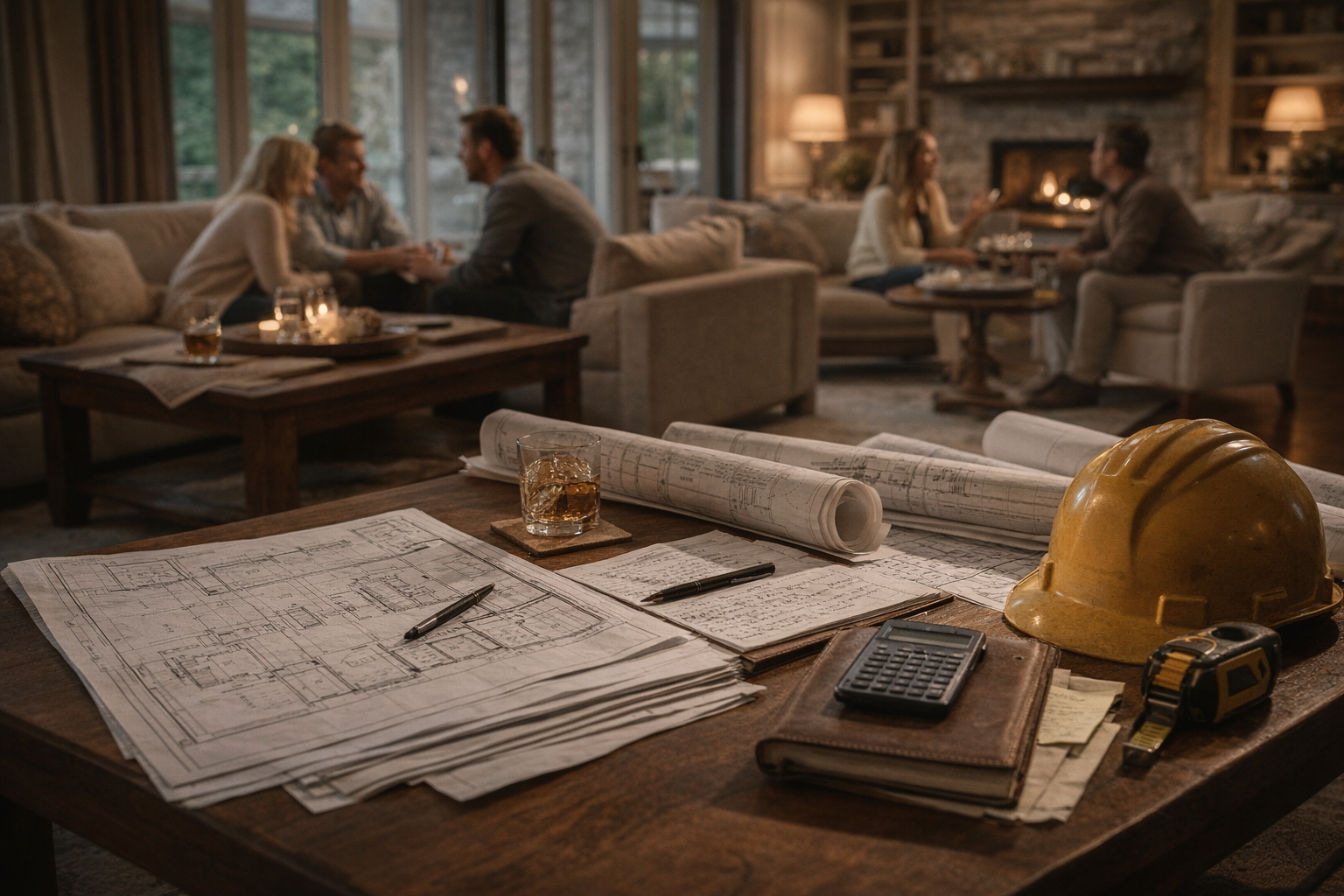
It usually comes up casually.
You’re at a school event, a dinner, or a weekend gathering, and someone mentions their build. At first it sounds exciting, then the story shifts.
Delays that stretched months longer than expected. Costs that kept climbing without clear explanations. Decisions that felt rushed or unclear. Frustration that built slowly over time.
By the end of the conversation, you’re left thinking the same thing many homeowners do:
“How does this happen on projects at this level?”
Because these aren’t inexperienced clients. They’re thoughtful, successful people building significant homes for their families.
And yet, the same patterns show up again and again.
It’s Not a Budget Problem, It’s a Process Problem
Most people assume these situations come down to money.
Either the project was under-budgeted, or the client didn’t plan properly.
In reality, that’s rarely the root issue.
Many of these projects start with realistic budgets and strong intentions. The breakdown happens in how the project is managed once it begins.
When there isn’t a clear, structured process guiding decisions, small uncertainties start to stack up.
A question about scope becomes a change order. A missing detail turns into a delay. A rushed decision leads to something that doesn’t quite feel right.
Individually, these moments seem manageable. Together, they create the experience people describe as a “nightmare.”
Where Trust Breaks Down
For most homeowners, trust is the foundation of the entire experience.
You understand that building a custom home involves complexity. You expect decisions, adjustments, and collaboration.
What you don’t expect is to feel like you have to second-guess every number or recommendation.
That’s where many projects go off track.
When pricing isn’t clearly explained, or when changes feel one-sided, it creates doubt. Not always immediately, but over time.
And once that doubt sets in, every conversation becomes harder.
Even reasonable decisions can feel questionable if the foundation of trust isn’t strong.
This is especially true for clients who are aware of their financial position. They want to feel confident they’re being treated fairly, not differently.
How Delays Start, and Why They Compound
Delays are another common theme in these stories.
What’s important to understand is that most delays don’t come from a single major issue.
They come from a series of smaller breakdowns.
A missed coordination between trades. A late decision because information wasn’t clear early enough. A material selection that wasn’t finalized in time.
Each one may only add a few days or weeks. But over the course of a project, they compound.
For families, this matters more than most people realize.
It’s not just about the schedule. It’s about moving plans, school years, and time that can’t be recovered.
When clients say a project “dragged on,” it’s usually the result of many small gaps in planning and communication, not one big failure.
The Role of Transparency in a Smooth Project
One of the clearest differences between a smooth project and a difficult one is transparency.
In projects that go well, clients understand:
What things cost and why
What decisions need to be made and when
How changes will impact both budget and timeline
There’s no guessing. No surprises that feel out of proportion.
In projects that don’t go well, those same areas are unclear.
Costs feel like they move without warning. Decisions feel reactive instead of planned. The client feels like they’re always catching up.
That gap in clarity is what creates stress, even when the actual work is progressing.
Why Experience Alone Isn’t Enough
It’s easy to assume that hiring an experienced builder eliminates these risks.
Experience does matter. But on its own, it doesn’t guarantee a smooth process.
The difference comes down to how that experience is applied.
A builder can have years of experience but still operate reactively, handling issues as they arise rather than preventing them.
A well-managed project, on the other hand, is proactive.
It anticipates decisions. It coordinates details early. It creates a structure where problems are less likely to appear in the first place.
That shift, from reactive to proactive, is what separates a stressful build from an enjoyable one.
What This Means When You’re Planning Your Own Home
If you’re hearing these stories from friends, it’s natural to wonder how to avoid the same experience.
The answer isn’t to expect fewer decisions or less complexity. Every custom home involves both.
The difference is how those decisions are guided.
A well-run project:
Gives you clarity before you need to make choices
Keeps your budget transparent and grounded
Maintains momentum so the timeline stays on track
Creates an environment where you can focus on the exciting parts of the process
That’s what allows the experience to feel not just manageable, but genuinely enjoyable.
A Different Kind of Building Experience
The stories you hear at social events are real. But they’re not inevitable.
They’re usually the result of gaps in process, communication, and trust that build over time.
When those elements are handled correctly from the beginning, the entire experience changes.
The project moves with clarity. Decisions feel informed. The home comes together the way you expected it would.
And instead of telling cautionary stories afterward, clients talk about how much they enjoyed the process of creating something meaningful for their family.
If you want guidance on how to approach your project with that level of clarity and care, we’re here to help.