
The Most Common Missteps Luxury Clients Make Before Design Even Starts
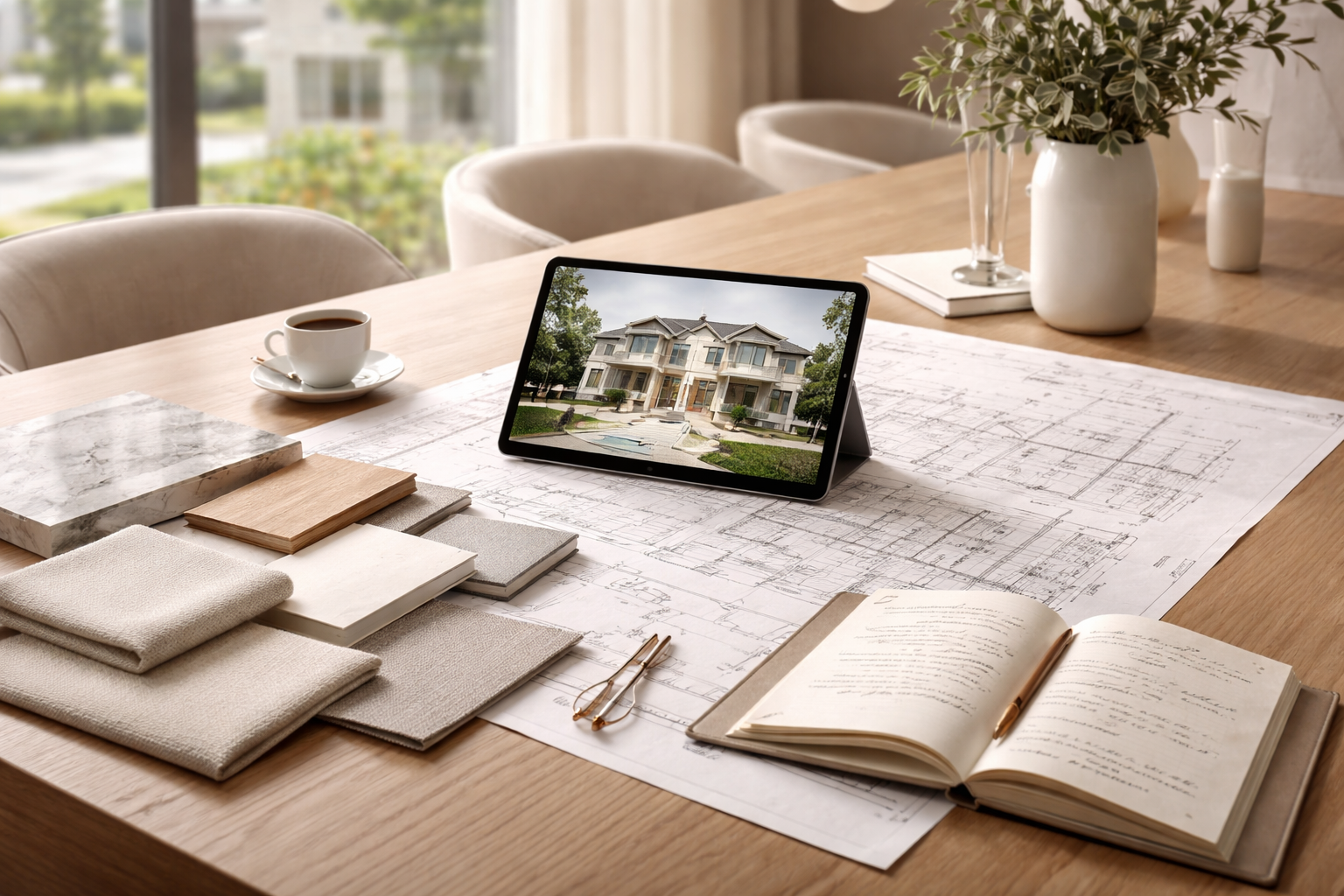
Before a single floor plan is drawn or a material is selected, most luxury home projects have already been set on a path, either toward a smooth, rewarding experience or toward unnecessary stress, cost creep, and delays.
What’s surprising is where those outcomes are decided.
It’s not during construction.
It’s not even during design.
It happens in the early thinking, long before a builder is formally engaged.
For families planning a custom home or whole-home transformation in Wellesley and surrounding towns, these early decisions carry more weight than most people realize. And the clients who enjoy the process the most tend to avoid a small set of common missteps that others unknowingly fall into.
Let’s walk through them.
Starting With Design Before Defining Reality
It’s natural to begin with inspiration. You see a home at a school event, visit a friend’s property, or save ideas that reflect the lifestyle you want for your family.
But jumping straight into design without first grounding the project in reality often creates problems that are difficult to unwind later.
Many clients assume that design will naturally align with budget. In practice, design tends to expand to match vision, not constraints. Without early guidance from a builder, plans can evolve into something that feels right on paper but requires significant revision once real costs are introduced.
The result is frustration, delays, and sometimes a redesign that could have been avoided entirely.
The clients who have the best experience take a different approach. They involve a builder early, not to limit creativity, but to shape it. They understand what different levels of detail, finishes, and structural decisions actually mean in terms of cost and complexity before design moves too far.
That early alignment creates momentum instead of rework.
Treating Budget as a Moving Target Instead of a Strategy
In the luxury space, there’s often an assumption that budget flexibility solves most problems.
But what many homeowners discover is that flexibility without structure leads to uncertainty, and uncertainty leads to overspending in the wrong places.
We’ve seen projects where significant investment went into features that didn’t meaningfully improve how the home lived day to day, while other areas that affect comfort, durability, or long-term value were underprioritized.
This isn’t about spending less. It’s about spending intentionally.
When your budget is treated as a strategy from the beginning, decisions become clearer. You understand where to invest for impact, where to simplify, and how to balance architectural ambition with practical execution.
That clarity protects not just your finances, but your confidence throughout the build.
Choosing a Builder Too Late in the Process
Many clients believe they should complete design first, then bring in a builder to price it.
On the surface, that feels logical. In reality, it often introduces avoidable risk.
When a builder enters after design is complete, their role becomes reactive. They’re pricing decisions that have already been made, rather than helping guide those decisions in a way that aligns with your goals, budget, and timeline.
This is where disconnects happen.
Plans may look refined but lack the level of detail required for accurate pricing. Certain architectural elements may introduce complexity that affects sequencing or cost. And opportunities to simplify or improve the build process have already passed.
Bringing a builder in early shifts the dynamic. It creates a collaborative environment where design, cost, and construction are aligned from the start.
That alignment is what keeps projects moving forward without constant course correction.
Underestimating the Impact of Complexity
A $5M home is not simply a scaled-up version of a $3M home.
As projects grow in value, they grow in complexity. More detailed millwork, higher-end materials, tighter tolerances, and increased coordination between trades all require a higher level of oversight.
Many clients don’t fully appreciate how much this complexity influences both cost and timeline.
It’s not just about what you’re building. It’s about how many decisions, details, and dependencies are involved in executing it well.
When complexity isn’t accounted for early, timelines become optimistic and budgets become vulnerable.
The right guidance helps you understand where complexity adds meaningful value and where it simply adds pressure. That distinction is what keeps the project enjoyable rather than overwhelming.
Assuming All Builders Approach Pricing the Same Way
It’s easy to compare builders based on a percentage or a high-level number.
But those numbers rarely tell the full story.
Some builders present a lower management fee, then charge project management time separately. Others rely heavily on allowances that shift as selections are made. On paper, these structures can appear competitive. In practice, they often lead to a final cost that feels unpredictable.
For someone investing at this level, predictability matters more than optics.
A transparent pricing structure, where the real cost of managing the project is accounted for upfront, removes that uncertainty. It allows you to make decisions with confidence, knowing that the number you’re working from reflects the true scope of the build.
This is where trust is built, not just in conversation, but in how the project is structured from day one.
Overlooking the Importance of the Experience Itself
Most clients focus on the finished home, and rightly so.
But the experience of getting there matters more than many expect.
A custom home project will span months, often over a year. It involves hundreds of decisions, ongoing communication, and a level of coordination that touches nearly every aspect of the process.
When that experience is well-managed, clients often describe the process as engaging and even enjoyable. When it’s not, even a beautiful outcome can feel overshadowed by the path it took to get there.
The difference comes down to the team guiding the process.
Clear communication, thoughtful planning, and a builder who genuinely prioritizes your interests change the entire tone of the project. It becomes something you look forward to being part of, rather than something you’re managing from a distance with concern.
The Shift That Changes Everything
The clients who navigate this process most successfully aren’t necessarily the ones with the biggest budgets or the most detailed vision at the start.
They’re the ones who seek clarity early.
They ask the right questions before design begins. They align with a builder who values transparency. They treat their budget as a tool, not a guess. And they understand that the process itself deserves as much attention as the outcome.
That shift changes everything.
Build With Confidence From the Start
If you’re considering a custom home or whole-home transformation in Wellesley or the surrounding towns, the best place to start is with a conversation.
We can walk you through how to approach the early stages in a way that protects your budget, aligns your design, and sets your project up for a smooth, well-managed build.
When the foundation of the process is right, everything that follows becomes clearer.
If you’re thinking about building or transforming your home through a major renovation or addition, we’re here to help you navigate those early decisions with clarity and confidence.